


A business analyst is an important part of any project management team. They act as a bridge between users and project managers by collecting information, understanding needs, and documenting processes. They also confirm final documents with users to make sure everything is correct.
Business analysts help companies improve processes, products, services, and software. They connect the organization with technology to increase productivity. Because of this, business analysts must have certain skills to achieve their goals.
Business analysis is the process of identifying requirements and finding solutions that add value to a company and its stakeholders. People who work in this field are called business analysts.
Table of Contents
What Do Business Analysts Do?
Business analysts help close the gap between company management and technical data. They work with complex systems to improve processes and support decision-making.
Here is what a typical day for a business analyst looks like.
Business Analyst Responsibilities
-
Study business processes, predict needs, and find areas for improvement.
-
Design and apply new solutions, then check if they work well.
-
Stay updated with the latest tools and methods to improve procedures.
-
Hold meetings and make presentations to share ideas and findings.
-
Conduct needs analysis to understand what the company requires.
-
Track progress and report results.
-
Explain goals and ideas clearly to team members and managers.
-
Collect information from meetings with stakeholders and prepare reports.
-
Coordinate between clients, technical teams, and management.
-
Use company resources in a cost-effective way.
-
Make sure solutions meet company expectations.
-
Manage projects, monitor progress, and review performance.
-
Update and maintain company procedures.
-
Decide which tasks and initiatives are most important.
-
Act as a link between users and stakeholders.
-
Manage resources and handle conflicts if they appear.
Business Analyst Skills
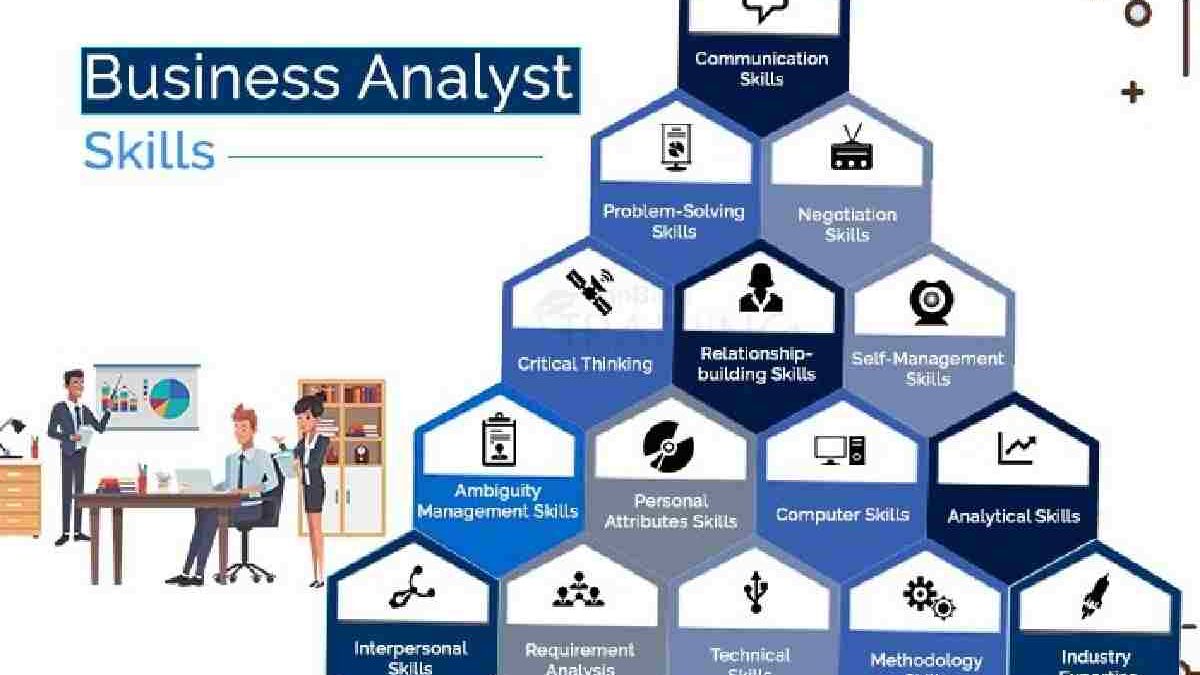
A business analyst needs both technical and personal skills. They should understand data, analyze trends, and communicate well.
Not all analysts need advanced IT knowledge, but they should understand how systems and tools work. Some analysts come from an IT background and later move into business analysis.
According to the International Institute for Business Analysis (IIBA), important skills include:
-
Strong communication skills
-
Teamwork and advisory abilities
-
Facilitation skills
-
Problem-solving and analytical thinking
-
Attention to detail
-
Organizational skills
-
Understanding of business structure and importance
-
Stakeholder analysis
-
Cost-benefit analysis
-
Process modeling
-
Basic knowledge of networks and databases
-
Technical skills
-
Leadership
-
Project planning and execution
-
Analytical skills
How to Become a Distinguished Business Analyst
Many people follow the same old methods. But to stand out, you must show unique skills and bring real change.
Here are ways to become an outstanding business analyst:
1. Study Data Carefully
Business analysts make decisions based on data. This means you must understand where the data comes from, how it was collected, and what it means before making suggestions.
2. Strengthen Communication Skills
You must act as a link between different teams. Good communication helps you explain technical ideas clearly and overcome challenges.
3. Act Quickly When Problems Appear
Paying attention to details and fixing errors early builds a strong reputation. As Alex Omelchenko explains, fixing mistakes during requirement analysis costs nothing, but fixing them later in software development can be expensive.
To gain these advantages, you should also consider professional certifications.
Business Analysis Certificates
ECBA™ – Entry Certificate in Business Analysis
This course covers the basics of business analysis according to the BABOK® Guide. It includes core concepts, knowledge areas, and key techniques used by business analysts.
PMI-PBA® – Professional in Business Analysis
This certificate is for project managers working with requirements and business analysis. It improves your skills, increases job opportunities, and teaches you different tools and methods.
CBAP® – Certified Business Analysis Professional
This is for experienced analysts. It recognizes specialists who are skilled in identifying business requirements and finding solutions.
Expected Salary for Business Analyst Jobs
Every year, the demand for business analysts grows, especially in the IT sector. They work closely with senior leaders, customers, and stakeholders, making them an important part of any organization.
Business analysis is a job for smart thinkers and problem-solvers. With the right skills and dedication, you can become a top business analyst that many companies would love to hire.